
Introduction
Choosing the right pot is an important part of caring for plants. A planter affects how water moves through the soil, how often you need to water, and how your greenery looks at home. Among the many options available, terracotta pots remain a favourite because they are simple, timeless and made from fired clay.
Terracotta has a warm, earthy colour that pairs beautifully with foliage and flowers. Unglazed terracotta is also porous, so some air and moisture can move through its walls. This can help plants that prefer their soil to dry between waterings, although it also means the soil may dry faster than it would in plastic or glazed ceramic. The best pot depends on the plant, your climate and your routine.
What Are Terracotta Pots?
Terracotta means “baked earth”. These pots are made from clay that is shaped and fired until firm. Many planters retain a porous, unglazed surface, giving them their familiar reddish-brown colour and matte finish. They range from small pots for seedlings and herbs to large planters for outdoor plants.
Their natural appearance suits traditional courtyards as well as modern balconies, patios, windowsills and indoor plant corners. Small differences in shade and texture can also give handmade pots an individual character.
Why Terracotta Pots Are a Great Choice
- Breathable clay walls. Unglazed terracotta is porous, allowing some air and moisture to move through the pot walls. This can help the potting mix lose excess moisture. It does not replace drainage holes or a suitable soil mix, but it can be helpful for plants that dislike sitting in wet soil.
- Helpful moisture management. Soil in terracotta pots often dries faster than soil in non-porous containers. This can suit many succulents and cacti when paired with a free-draining mix. Moisture-loving plants may need more frequent watering, particularly in hot or windy conditions.
- Natural, earthy appearance. The warm clay colour creates a pleasing contrast with green leaves and colourful flowers. Terracotta works with wood, stone, metal and woven décor, making it an easy choice for balconies and living spaces.
- Many sizes and shapes. Terracotta planters are available for seedlings, herbs, indoor foliage, flowering plants and small shrubs. Choose a pot that gives the roots room without surrounding a small root system with too much damp soil.
- Traditional craftsmanship. Clay pots connect everyday gardening with a long tradition of pottery. Handmade pieces may have subtle variations that add warmth and character to a space.
- Reusable with care. A well-maintained terracotta pot can often be used for several planting seasons. Clean it between uses and handle it carefully, as fired clay can crack if dropped or exposed to damaging conditions.
Which Plants Grow Well in Terracotta?
- Terracotta can be a useful choice for plants that prefer a well-drained growing medium. Examples include many succulents and cacti, aloe vera, jade plants, rosemary, thyme and some flowering plants such as marigolds. Tulsi and many common balcony plants can also grow in terracotta when light, drainage and watering are suitable.
- Indoor foliage plants can be grown in terracotta too, but moisture-loving varieties may need more frequent monitoring. Do not assume every plant prefers the same pot: let the plant’s individual needs guide your choice.
Terracotta vs Other Pot Materials
Terracotta: porous, earthy-looking and reusable with care; soil may dry faster and the pot can break if dropped.
Plastic: lightweight and often budget-friendly, retaining moisture longer; drainage and watering habits remain important.
Glazed ceramic: available in many finishes and often retains moisture longer; it can be heavy, and drainage should be checked.
Cement or concrete: sturdy for many outdoor settings, but often very heavy; make sure the pot drains properly.
How to Choose the Right Terracotta Pot
Check for a clear drainage hole. For most plants, drainage is important because excess water should be able to escape rather than collect around the roots.
Match the size to the root ball. Choose a pot with some room for growth, but avoid moving a small plant into a very large container, which may hold more wet mix than the roots can use.
Consider the location. A sunny, windy balcony can dry pots quickly, while a cool indoor corner may dry more slowly. Pick a pot and watering routine for the actual conditions.
Inspect the rim, base and overall structure. Small handmade variations are normal, but avoid pots with major cracks or an unstable base.
Plan for the weight. Large clay pots become heavier after filling with soil. Decide where they will sit before planting, especially on shelves and balconies.
How to Plant in a Terracotta Pot
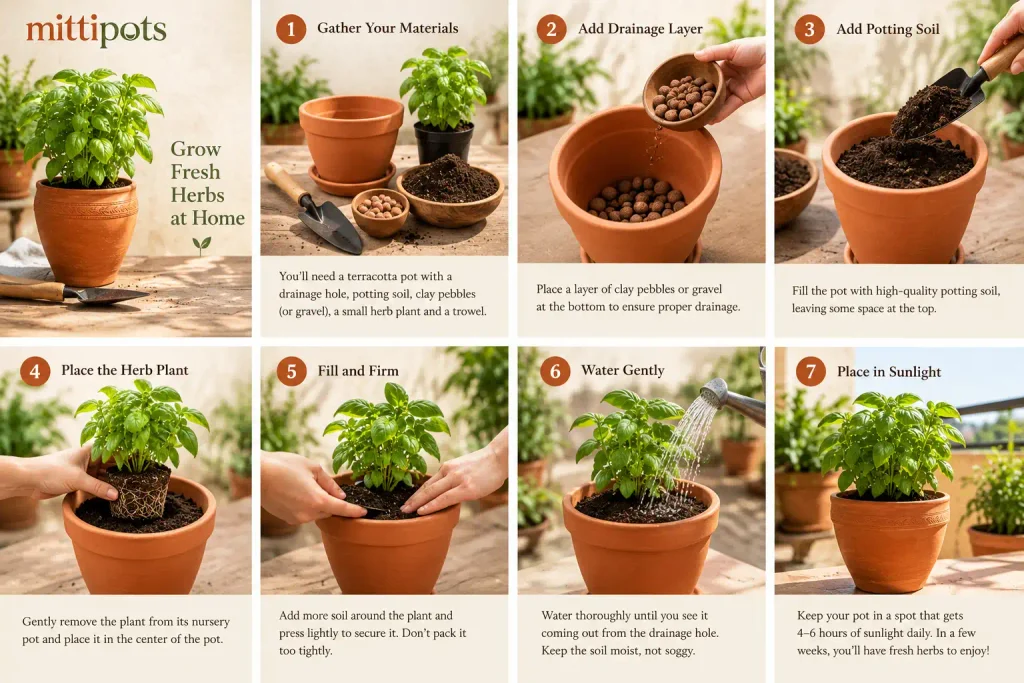
- Prepare the pot and ensure the drainage hole is open.
- Choose a potting mix suited to the plant; succulents generally need a particularly free-draining mix.
- If needed, place mesh over the drainage hole to reduce soil loss without blocking water flow.
- Position the plant at a similar depth to its previous container and fill around the root ball without compacting the mix too firmly.
- Water thoroughly and allow excess water to drain. Empty the saucer so the pot does not stand in water.
- Check soil moisture before watering again. Do not rely on a fixed schedule; weather, pot size, plant type and sunlight all affect drying time.
Care and Maintenance Tips
- Check soil moisture regularly, especially in hot weather or direct sunlight.
- Water according to the plant’s needs and allow excess water to drain.
- Brush away mineral deposits gently. White marks may form when minerals from water or fertiliser collect on the surface.
- Clean used pots before replanting by removing old soil and plant debris, then allow the pot to dry.
- Handle pots carefully and store unused ones where they cannot be knocked over.
- In places that experience freezing conditions, protect pots from freezing weather because moisture in clay can contribute to cracking.
Common Mistakes to Avoid
- Using a pot without drainage and assuming porous clay alone will prevent waterlogging.
- Watering every plant on the same schedule rather than checking the soil.
- Choosing a pot that is much larger than the plant’s root system.
- Leaving a saucer full of water under the pot for long periods.
- Assuming terracotta suits every plant; some plants prefer soil that stays moist for longer.
- Repotting without checking whether the plant actually needs more space.
Terracotta Pots for Indian Homes and Balconies
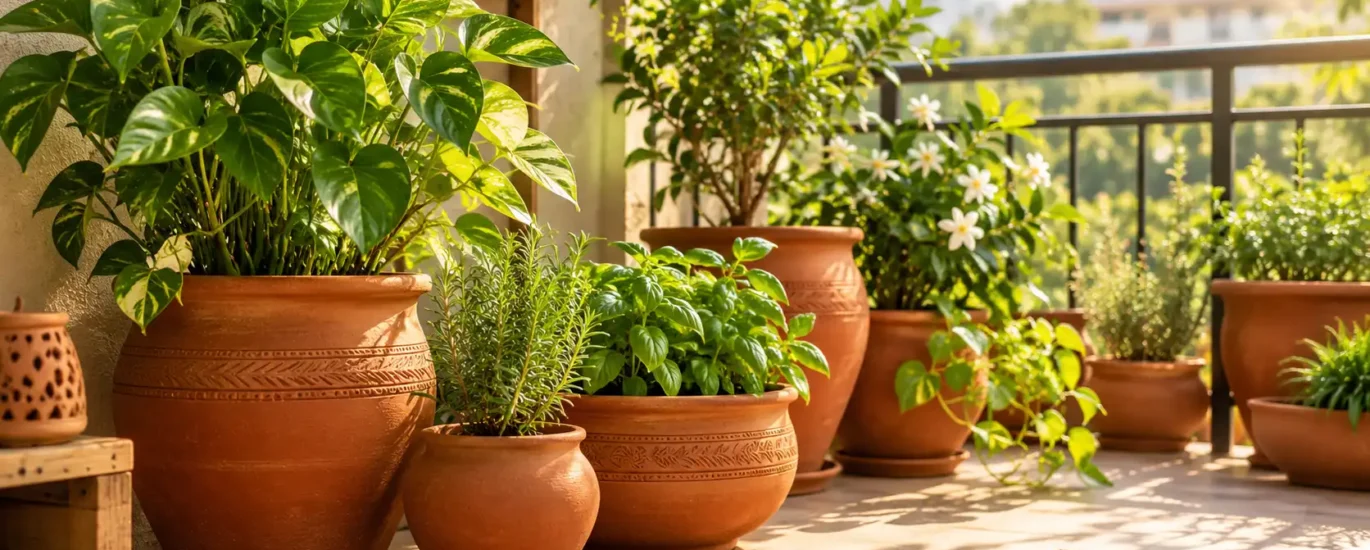
Terracotta planters are a natural fit for Indian homes, where balconies, verandas, courtyards and windowsills often become small green spaces. A row of clay pots can hold tulsi, herbs, chillies or seasonal flowers, while larger planters can anchor a patio or outdoor seating area. Their earthy tone pairs well with natural fibres, wooden accents and simple furniture.
In warm weather, pots may dry quickly, particularly in exposed locations. Group plants according to their watering needs, check moisture more often and use a suitable potting mix. For balconies, consider the weight of filled pots and secure them where wind or accidental knocks could cause them to fall.
Why Choose Mittipots?
At Mittipots, we celebrate the beauty and usefulness of clay products in everyday living. Terracotta planters bring an earthy character to plant corners while connecting contemporary homes with traditional materials and craftsmanship. Choose a planter that suits your plant, your space and your routine.
Explore the Mittipots Garden & Planters collection to find clay planters for indoor greenery, balcony gardens and outdoor spaces. Choose thoughtfully, plant with care and let your green corner grow one pot at a time.
Conclusion
Terracotta pots remain popular because they combine a classic look with practical growing characteristics. Their porous walls can help soil dry more quickly, which is useful for many plants that prefer good drainage. They come in a range of sizes, complement many home styles and can be reused with proper care. The key is to match the pot to the plant, provide drainage and adapt watering to your climate.
